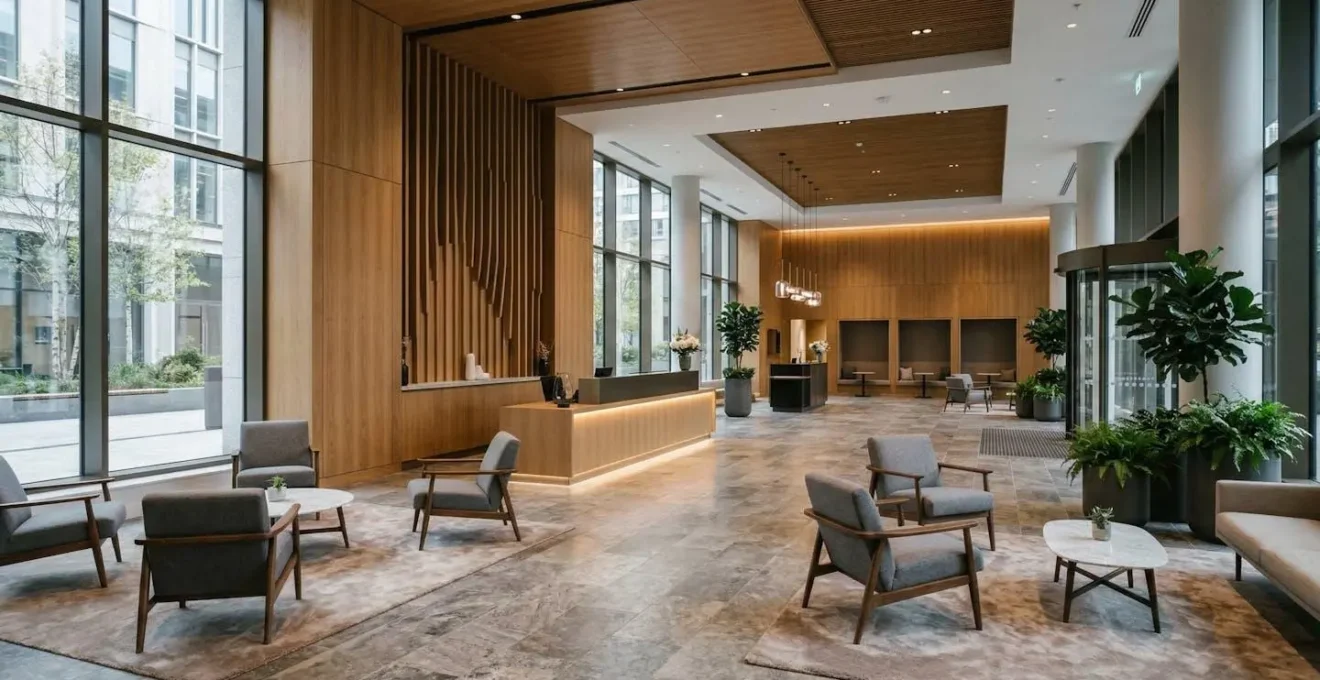
I reviewed a hotel renovation in Miami last year. The project manager, Marcus, had specified identical panels for walls and floors to simplify procurement. Three months in, the installers called with bad news: the WPC wall panels failed impact testing for the lobby floor. That single specification error cost the project six weeks and forced a complete material re-order.
The confusion makes sense. WPC and SPC sound similar. Both use composite technology. Both promise durability. But these materials solve fundamentally different problems. According to Grand View Research, the global SPC flooring market alone reached USD 5.93 billion in 2025 with commercial applications growing at 7.6% CAGR. That growth comes precisely because professionals now understand what each material does best.
WPC vs SPC: The 30-Second Version
- WPC (wood fiber + PVC) works best for wall cladding and exterior applications
- SPC (stone powder + PVC) dominates high-traffic flooring due to rigid core impact resistance
- Using the wrong material in the wrong application leads to failures within 18-24 months
- For commercial projects, specify SPC for floors and WPC for walls—not interchangeably
This guide breaks down the critical differences that actually matter for project decisions. Not the marketing claims. The real-world performance characteristics I see determine success or failure on commercial jobs.
Whether you are specifying materials for a renovation or sourcing from manufacturers, understanding these distinctions prevents costly mistakes and warranty claims down the line.
What This Guide Covers
WPC and SPC: Not Interchangeable Materials
The names create the confusion. Wood Plastic Composite. Stone Plastic Composite. Both composites. Both use PVC as a binding agent. But the core difference changes everything about where each material performs.
WPC wall panels contain a significant proportion of wood fiber—typically mixed with PVC resin. This composition creates lighter panels with natural acoustic properties. The wood content also means slightly more flexibility, which works perfectly for wall cladding where impact forces run perpendicular to the surface. When specifying panels from an established wood panel manufacturer, you get materials engineered specifically for vertical installation and exterior facades.
SPC flooring replaces that wood fiber with calcium carbonate and limestone. The result? A rigid core that handles downward impact, rolling loads, and the constant compression of foot traffic. This density is why SPC dominates commercial flooring applications where durability matters more than weight.
The following comparison shows the fundamental technical differences that drive application decisions:
Specifications reflect industry standards as of January 2026.
| Characteristic | WPC Wall Panels | SPC Flooring | Best For |
|---|---|---|---|
| Core Composition | Wood fiber + PVC | Limestone/calcium carbonate + PVC | Application-specific |
| Relative Weight | Lighter | Denser/heavier | WPC for vertical installation |
| Primary Application | Wall cladding, exterior facades | Interior flooring | Match to surface type |
| Impact Handling | Perpendicular forces (walls) | Downward compression (floors) | SPC for high-traffic |
| Acoustic Properties | Better sound absorption | Harder, less absorption | WPC for noise reduction |
Performance Where It Matters: 3 Critical Differences
Marketing sheets list dozens of specifications. Most do not affect your project outcome. The projects I have reviewed over the years fail or succeed based on three performance characteristics. Get these right, and the rest follows.
Water and Moisture Resistance
Both materials claim waterproof performance. In practice, the distinction matters for specific environments.
SPC’s stone-based composition provides excellent waterproof characteristics because it contains zero wood content. No wood means no organic material to absorb moisture or swell. For bathrooms, kitchens, and commercial spaces with wet cleaning protocols, SPC flooring handles constant moisture exposure without dimensional changes.
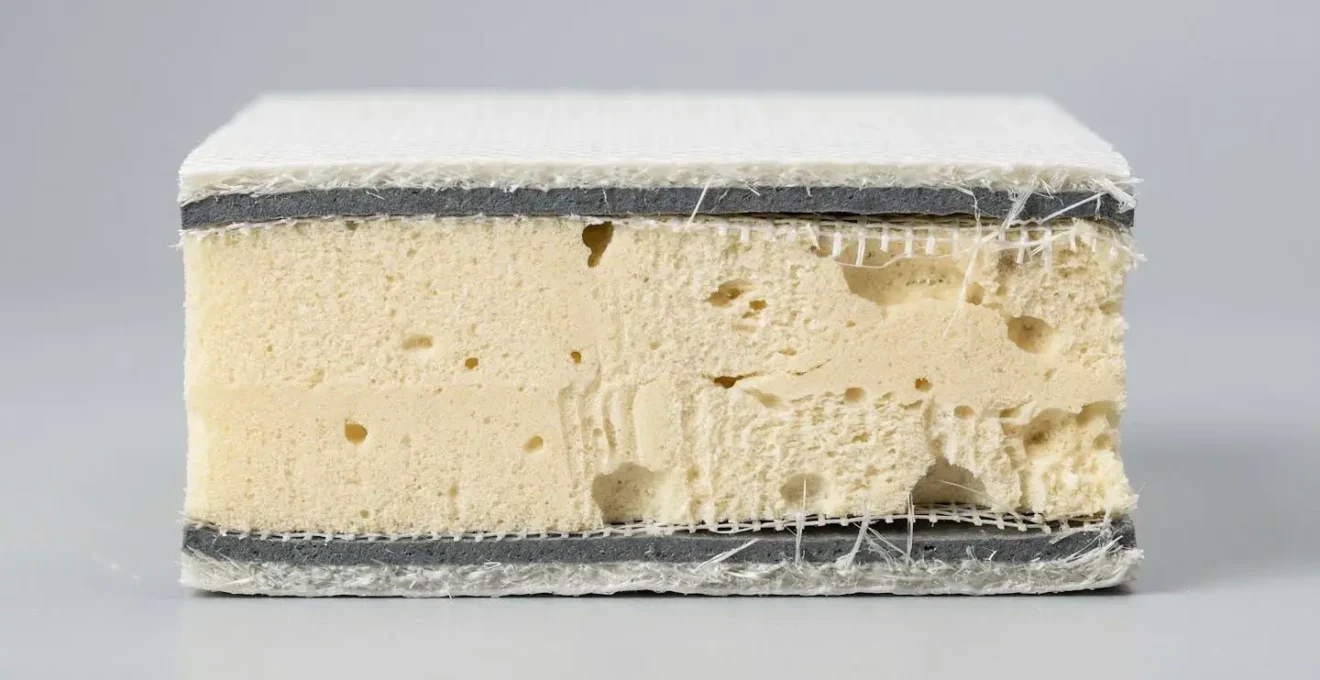
WPC handles moisture differently. The wood fiber content can absorb humidity over time, though modern treatments minimize this significantly. For wall applications where standing water is not a concern, WPC performs well. The issue arises when specifiers use WPC for floor applications in wet areas—I have seen installations fail within two years because the subfloor trapped moisture against the wood-containing panels.
Understanding the value of sustainable building materials includes recognizing that durability depends on correct application, not just material quality.
Impact Resistance and Durability
Here is where the rigid core distinction becomes critical. SPC flooring is engineered to withstand high foot traffic and impact. The limestone-dense core resists dents from dropped objects, handles rolling loads from furniture and equipment, and maintains dimensional stability under constant compression.
For high-traffic commercial flooring—hotel lobbies, retail spaces, restaurant floors—SPC is the standard specification. The ASSURE CERTIFIED standard for rigid core flooring specifically tests performance under ASTM F3261-17, which evaluates how these materials handle real-world stress.
Industry Certification Note: ASSURE CERTIFIED establishes a uniform North American standard covering indoor air quality, performance testing, and material safety for both WPC and SPC rigid core products. Look for this certification when evaluating suppliers.
WPC wall panels handle impact differently. Wall installations receive perpendicular forces—bumps, scrapes, contact from moving furniture. The slightly flexible wood-fiber composition absorbs these impacts without cracking. But put WPC under constant downward compression? The material was never designed for that stress pattern.
Temperature and UV Stability
This is where specification errors cause the most expensive failures.
In my experience reviewing commercial projects, one of the most common mistakes is using SPC in exterior wall applications. SPC is engineered for interior flooring. When exposed to direct sunlight and weather, I have seen installations fail within two years. This tends to occur more frequently in regions with high UV exposure, though installation quality also plays a significant role.
SPC’s mineral-based composition offers excellent dimensional stability across interior temperature variations. Heated floors, air conditioning cycles, seasonal changes—the rigid core handles these without warping. But UV exposure degrades the material structure over time.
WPC with proper UV treatment performs well for exterior cladding applications. The composition handles temperature swings and, with appropriate coatings, resists UV degradation. Exterior-rated WPC wall panels are specifically formulated for this environment.
Which Material for Which Application
The project I mentioned earlier—Marcus and the Miami hotel renovation—taught me that procurement simplification creates specification errors. The instinct to use one material everywhere seems efficient until the wrong material fails in the wrong location.
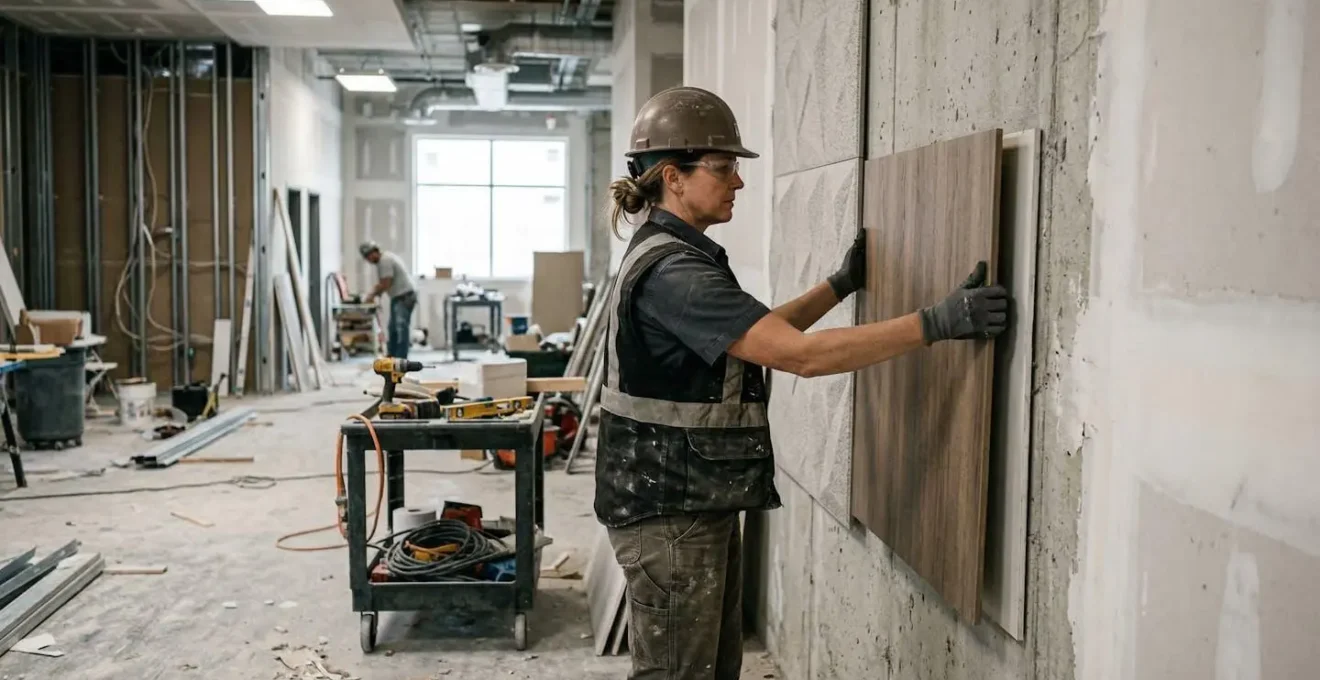
After revising Marcus’s specification, the project used WPC for the lobby walls and SPC for all high-traffic floor areas. Both products came from the same manufacturer, shipped in the same container. Procurement stayed efficient. But each material went where it performed best.
Which Material Fits Your Project?
-
Interior wall cladding (lobbies, corridors, feature walls):
WPC wall panels. Lighter weight simplifies installation, wood fiber provides acoustic benefits, handles perpendicular impact well.
-
High-traffic commercial floors (retail, hospitality, offices):
SPC flooring. Rigid core handles compression, resists dents and rolling loads, maintains dimensional stability under constant use.
-
Wet environment floors (bathrooms, kitchens, pool areas):
SPC flooring. Zero wood content means zero moisture absorption. Handles standing water and wet cleaning protocols.
-
Exterior wall facades and cladding:
WPC with UV treatment. Engineered for outdoor exposure when properly rated. Avoid SPC for any exterior application.
Specification shortcut: When specifying for mixed-use projects requiring both wall and floor treatments, source WPC and SPC from the same manufacturer. You maintain quality consistency, simplify logistics, and often qualify for better container pricing—without compromising material performance.
Sourcing WPC and SPC: What B2B Buyers Need to Know
Quality inconsistency remains the primary concern I hear from project managers sourcing composite panels internationally. The specifications look identical on paper. The samples arrive looking perfect. Then the container delivers material that does not match.
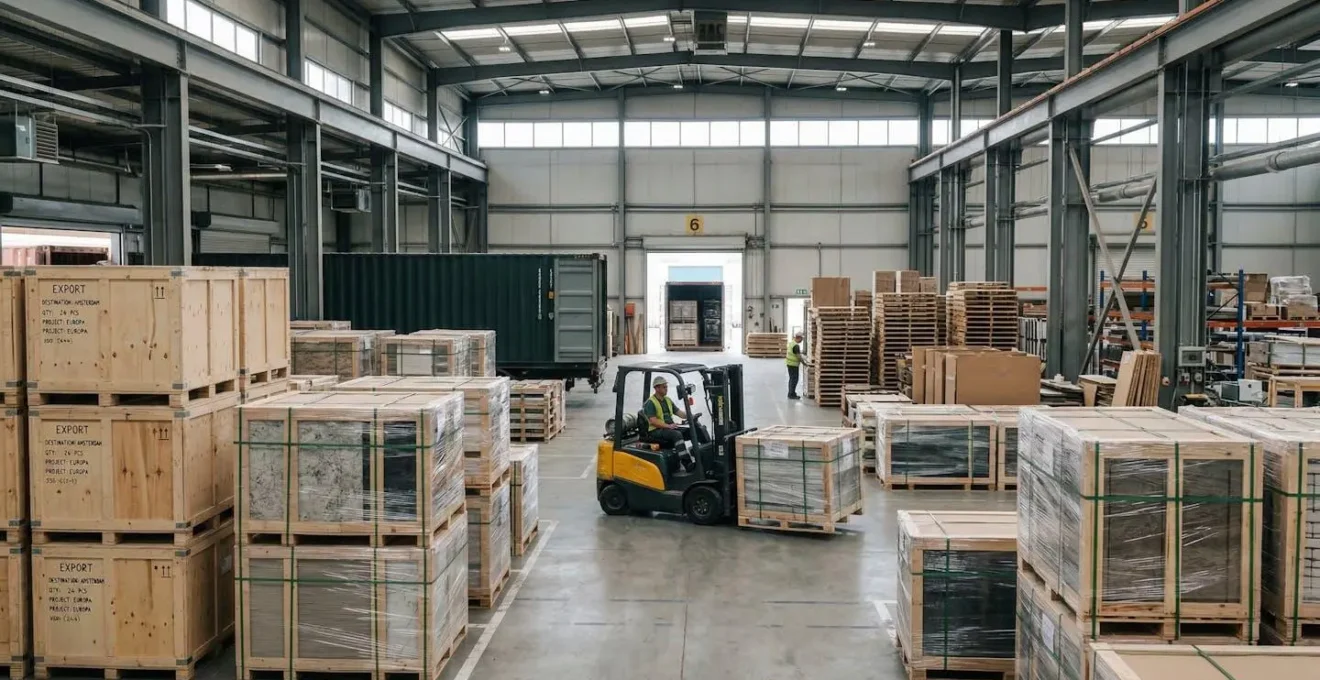
The difference comes down to supplier qualification. Manufacturers with established export track records—operations serving 100+ countries over a decade or more—have quality control systems refined through thousands of container shipments. Newer operations may offer lower quotes but lack the production consistency that commercial projects require.
Formaldehyde compliance adds another verification layer. The EPA‘s TSCA Title VI standards require composite wood products to meet strict emission limits. Updates proposed in February 2026 incorporate new ISO 12460-2:2024 testing standards. Verify that suppliers provide documentation demonstrating compliance—not just claims.
B2B Supplier Qualification Checklist
-
Verify manufacturing certifications (ISO quality management, CE marking for target markets)
-
Request physical samples before any bulk order commitment
-
Confirm mixed container options for projects requiring both WPC and SPC
-
Review export documentation process and TSCA compliance certificates
-
Check production capacity and typical lead times (expect 4-8 weeks for container orders)
Honestly, I have seen too many projects fail because procurement prioritized the cheapest quote over supplier track record. For commercial-scale orders, working with a manufacturer that has 10+ years of export experience eliminates most quality surprises.
For readers planning specific renovation projects, understanding Ottawa renovation priorities for homeowners provides additional context on material selection decisions.
Your Questions on WPC vs SPC Selection
Can I use WPC for flooring instead of walls?
Technically possible for light-traffic residential applications, but not recommended for commercial projects. WPC lacks the rigid core construction that handles constant downward compression. For any high-traffic environment, SPC flooring is the appropriate specification.
Is SPC suitable for outdoor applications?
No. SPC is engineered for interior flooring. UV exposure and weather conditions degrade the material structure. I have seen exterior SPC installations fail within 18-24 months. For outdoor surfaces, specify UV-treated WPC or dedicated exterior materials.
Which material is more cost-effective for large projects?
Cost-effectiveness depends on application match, not material price per square foot. Specifying the wrong material creates failures that cost far more than any initial savings. For mixed-use projects, source both WPC walls and SPC floors from the same manufacturer to optimize container logistics and pricing.
How do I verify material quality before bulk ordering?
Request physical samples first. Check for ASSURE CERTIFIED status for rigid core products. Verify TSCA Title VI formaldehyde compliance documentation. Ask about on-site quality control procedures and whether the manufacturer has third-party certification audits.
Can WPC and SPC be used together in the same project?
Absolutely—this is often the optimal approach. Using WPC for wall cladding and SPC for flooring puts each material where it performs best. Many manufacturers offer both product lines with compatible aesthetics, allowing visual consistency across surfaces while maintaining appropriate performance characteristics.
The Next Step for Your Project
Your Immediate Action Plan
-
Map each surface in your project: walls get WPC, high-traffic floors get SPC
-
Request samples from two to three manufacturers with 10+ years export track record
-
Verify ASSURE CERTIFIED status and TSCA compliance documentation before any commitment
The specification decision you make now determines whether your installation performs for fifteen years or fails in two. Match the material to the application. Verify the supplier. And never assume that similar names mean interchangeable performance.