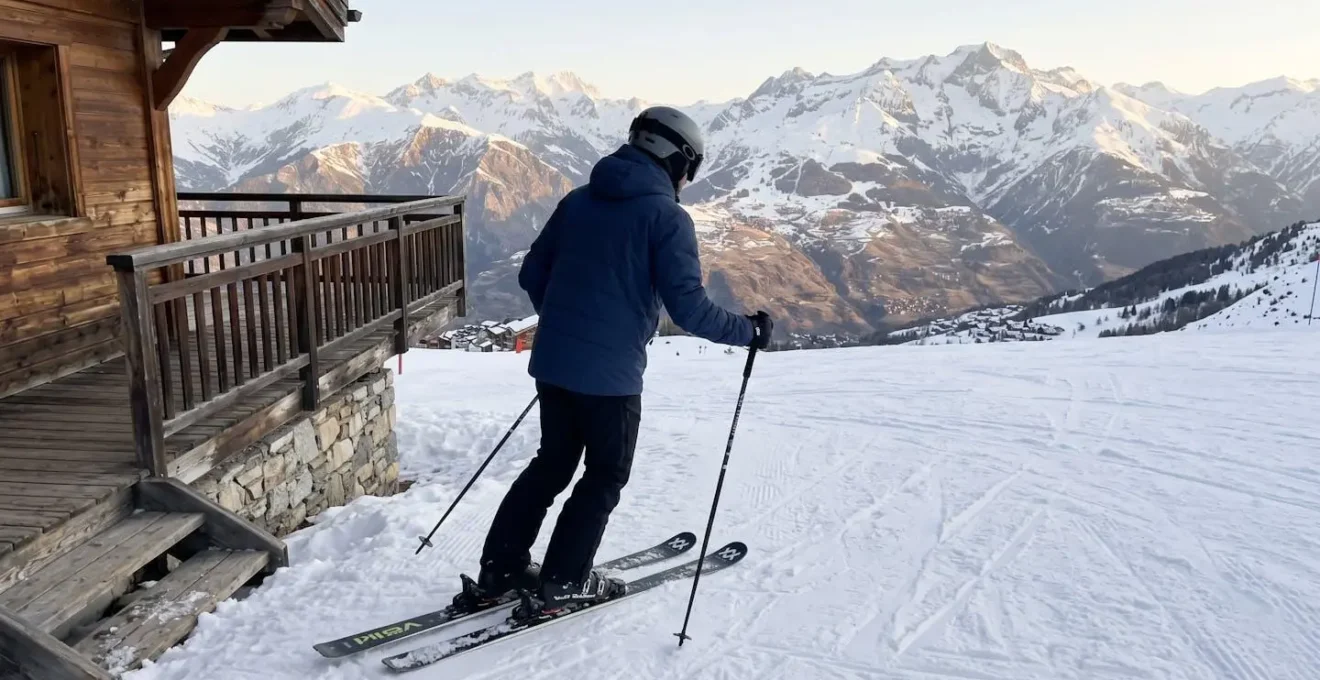
The difference between arriving at a Courchevel property and stepping directly onto groomed pistes versus hauling equipment 400 metres uphill isn’t just about convenience. It redefines how families spend their limited holiday time. When the 2025 Iglu Ski survey published by Winter Insight confirms that 54 per cent of skiers rank accommodation location above every other factor including catering type, the market signal is unambiguous: proximity to slopes has become the decisive booking criterion, surpassing even value-for-money considerations that influence 60 per cent of resort choices.
The alpine property market has undergone structural transformation over the past two decades. Where location once meant simply « proximity to village centre », today’s discerning guests prioritise operational efficiency: how quickly they transition from arrival to first run, how seamlessly logistics are managed, and whether precious holiday hours are consumed by coordination tasks or actual skiing.
This shift reflects broader behavioural changes in luxury travel consumption. Affluent families increasingly value time reclamation over amenity checklists, willing to pay substantial premiums for services that demonstrably eliminate friction. Understanding which premium features deliver measurable returns—and which represent marketing rhetoric—requires examining the operational mechanics behind ski-in/ski-out access and professional concierge coordination.
Your Courchevel essentials in 30 seconds:
- Direct slope access properties eliminate the daily logistics burden that typically consumes the first 90 minutes of each ski day for families staying further from lifts
- Professional concierge coordination arranges airport transfers, equipment delivery, ski school bookings and restaurant reservations before you arrive
- Peak season properties with genuine ski-in/ski-out access in Courchevel 1850 require booking six to nine months ahead due to limited availability
- The price premium for slope-side properties ranges from 30 to 50 per cent above comparable accommodation located 400 metres or more from piste access
The hidden time cost of poor slope proximity
Consider a typical morning routine for a family of four staying in a Courchevel apartment located 450 metres from the nearest lift station. Parents wake at 7:30am, prepare breakfast, dress two children in ski gear, gather equipment from storage, walk downhill carrying skis and poles through resort pathways, queue at the equipment rental shop to collect or adjust boots, purchase lift passes at the ticket office, locate the ski school meeting point, and finally reach the slopes by 10:15am. The process has consumed two hours and forty-five minutes before anyone makes a first turn.
54%
Proportion of skiers who prioritise accommodation location above all other booking factors
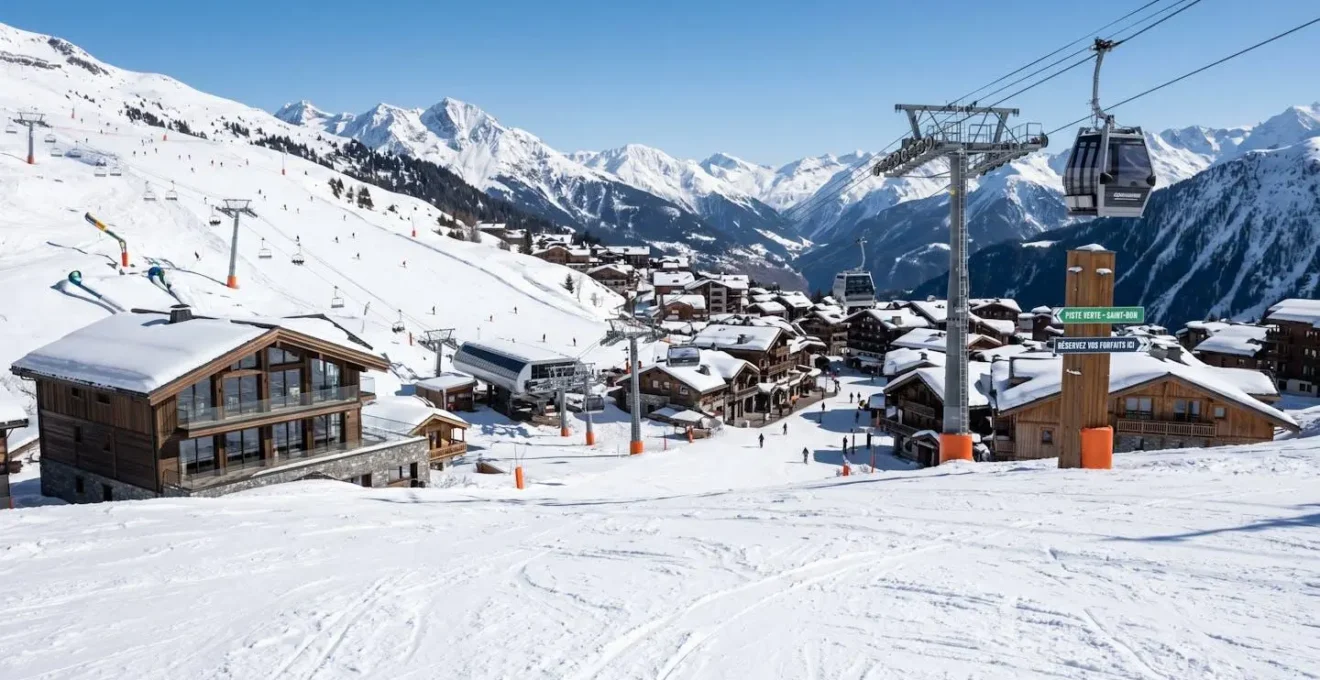
Contrast this with a ski-in/ski-out property where the terrace opens directly onto a blue-rated piste. Equipment stored in a dedicated ski room overnight. Boots fitted the previous evening via concierge-arranged delivery service. Lift passes collected from the property manager on arrival day. Children meet their ski instructor at the chalet door at 9:00am sharp. Parents clip into bindings on their own terrace at 9:15am and ski to the Saulire cable car within four minutes. The family has gained nearly two hours of actual skiing time, and the day hasn’t yet required a single logistical decision.
This cumulative time differential becomes particularly stark across a seven-day stay. Families in standard accommodation spend roughly 10 to 12 hours per week managing equipment transport, navigating resort pathways, and coordinating meeting points. Those in direct-access properties reclaim that time for additional runs, leisurely lunches, or simply arriving back at the accommodation less exhausted. The peer-reviewed research published in ScienceDirect examining service quality across major ski destinations demonstrates that operational convenience directly influences guest satisfaction scores and return booking behaviour, which explains why resorts serving over 400 million annual visitors globally now compete primarily on service experience rather than piste quantity alone.
What professional concierge coordination actually delivers?
The term « concierge service » suffers from vagueness in alpine property marketing. Some agencies simply provide a phone number for restaurant recommendations. Others orchestrate the entire stay logistics chain from airport departure to final checkout. The meaningful distinction lies in whether coordination happens before your arrival or requires your active participation once holiday time has already started.
Examine what comprehensive coordination looks like in practice. Three weeks before arrival, a property manager sends a pre-stay questionnaire covering:
- Airport transfer preferences
- Dietary needs
- Equipment specifications for each family member
- Ski school level assessments
- Dining preferences
Within 48 hours, the same manager confirms Geneva airport pickup timing, arranges equipment delivery to the property for a fitting appointment on arrival evening, secures ski school places for both children with ESF instructors, and pre-purchases lift passes for collection on arrival. You board your flight having made zero phone calls and navigated zero booking platforms beyond the initial property reservation. Platforms such as altitude-courchevel.com managing 112 properties across Courchevel’s altitude stations have systematised this pre-arrival coordination as standard practice, transforming what was traditionally a guest’s administrative burden into a managed service included within premium property rentals.

The operational value becomes clearest when plans change mid-stay. A 13-year-old develops boot discomfort on day three. A family decides they want to attempt a Michelin-starred dining experience but discovers the restaurant fully booked. Younger children progress faster than anticipated and need upgraded group lessons. In each scenario, professional concierge response typically delivers resolution within two to four hours: replacement boots arrive at the property by early afternoon, a cancellation table secures an 8:00pm reservation, and the ski school coordinator moves children into the appropriate advanced group for the following morning. Self-organised guests face the alternative of spending half a day navigating unfamiliar suppliers, language barriers, and availability constraints that local property managers resolve with established relationships and fluent French communication.
This framework mirrors the cost-benefit logic evident in the value of a professional cleaning company for time-pressed households: paying a premium for expert coordination systematically frees client time for higher-value activities, whether that means additional client billings in business contexts or maximising family skiing hours in alpine holidays.
The operational comparison below illustrates how coordination responsibility shapes daily experience. Professional management shifts virtually all logistical tasks to pre-arrival windows, whereas self-organisation compresses these same requirements into precious holiday hours.
| Logistics task | Self-organized approach | Concierge-managed approach | Time recovered |
|---|---|---|---|
| Airport transfer coordination | 60-90 minutes researching options, price comparison, booking confirmation, timing coordination risk | Pre-arranged via property manager, driver notified of flight delays automatically, zero client time | 90 minutes + stress elimination |
| Equipment rental and fitting | 2-3 hours visiting rental shop, sizing trials, potential language barriers, carrying equipment to accommodation | Equipment delivered to property, 30-minute fitting appointment on arrival evening | 2+ hours saved, Day 1 skiing starts immediately |
| Lift pass purchase | 45-60 minutes queuing at ticket office during peak morning hours | Pre-purchased passes ready for collection at property on arrival, immediate slope access next morning | 60 minutes + avoidance of peak-hour queues |
| Ski school booking for children | Phone calls during European business hours, uncertainty about instructor availability, potential language challenges | Reserved 3-4 weeks in advance, confirmed timing, instructor meets children at property door | Guaranteed placement + morning coordination stress eliminated |
| Restaurant reservations | Limited availability when booking during stay, communication barriers, uncertainty about quality | Concierge uses established venue relationships, secures priority access, confirms dietary requirements | Better dining experiences + removal of evening planning burden |
Real-world service scenarios: from ski school to restaurant bookings
The distinction between theoretical service descriptions and actual operational support becomes tangible when examining how concierge intervention resolves the unpredictable situations that arise during any alpine stay. Marketing brochures list available services; actual value emerges when those services respond to real problems under time pressure.
A family’s week: when coordination prevents holiday derailment
Consider a family of four—parents in their early forties, children aged 10 and 13—arriving at Geneva airport for their first Courchevel experience. Their Saturday afternoon flight encounters a 90-minute delay due to air traffic control restrictions. Under self-organised arrangements, this triggers a cascade of complications: the pre-booked shared shuttle has departed, the equipment rental shop closes at 6:00pm, and the family now faces arriving at an unfamiliar property after dark without keys, equipment, or dinner provisions.
Professional property management intercepts this scenario automatically. The transfer driver receives flight delay notifications via airline data feeds and adjusts pickup timing without client contact. The property manager, monitoring arrival status, arranges for keys to be left in a secure lockbox with access code sent via SMS, pre-stocks the refrigerator with arrival-day provisions, and reschedules the equipment fitting appointment to Sunday morning. The family arrives stressed by the flight delay but encounters zero additional friction. Their holiday commences normally on Sunday despite circumstances that would have consumed most of their first day troubleshooting logistics.
By mid-week, the 13-year-old reports persistent boot discomfort that’s limiting skiing enjoyment. Parents face a dilemma: spend Wednesday morning visiting rental shops, or push through discomfort for three remaining days. Concierge intervention delivers a third option. A single message to the property manager at 8:30am results in a rental technician arriving at the chalet by 2:00pm with three alternative boot models for fitting trials. The teenager returns to the slopes Thursday morning in properly fitted equipment, and the family has forfeited zero skiing time to resolve the issue.
The final intervention addresses an opportunity rather than a problem. On Thursday evening, parents decide they want to attempt Courchevel’s renowned culinary scene with a Michelin-starred experience, but discover the target restaurant fully booked for the remainder of their stay. The property manager leverages established venue relationships to identify a cancellation slot for 8:00pm Friday, confirms the reservation, and arranges childcare supervision at the property. A dining experience the family assumed inaccessible becomes the holiday highlight, accessible only through the concierge’s local network that independent visitors cannot replicate.
These scenarios share a common thread: professional coordination converts potential problems into resolved non-events, typically within two to four hours of the issue emerging. The alternative—families spending vacation time navigating unfamiliar suppliers, language barriers, and local market knowledge gaps—represents the hidden cost that premium services eliminate. When the 2025/26 Savills Ski Report confirms that prime Courchevel 1850 prices have increased 200 per cent since 2006 (outpacing the global ski market’s 150 per cent average), that premium directly reflects buyer willingness to pay for operational convenience and direct slope access in a resort where service quality has become the primary competitive differentiator.
Common questions about Courchevel accommodation and coordination
Is ski-in/ski-out access genuinely essential, or simply effective marketing rhetoric?
The answer depends entirely on your priorities and skiing profile. For families with young children, elderly guests, or professionals maximising limited holiday time, direct slope access delivers measurable value through the cumulative daily time savings of 60 to 90 minutes that would otherwise be consumed by equipment transport and resort navigation. A family of four staying seven days reclaims roughly 10 to 12 hours for actual skiing rather than logistics management.
Conversely, experienced solo skiers planning extended stays of 10 or more days, or couples comfortable with daily equipment carrying, may find standard properties located 300 to 500 metres from lifts perfectly adequate whilst saving 30 to 40 per cent on weekly accommodation costs. The premium is justified when time efficiency outweighs budget constraints.
What services are actually included in concierge coordination versus extra-cost additions?
Professional property management with premium accommodation typically includes core coordination services within the rental fee: airport transfer arrangement, ski pass procurement logistics, equipment delivery setup, restaurant booking assistance, and general stay support. The property manager acts as your local operations coordinator.
Actual service costs—the lift passes themselves, equipment rental fees, private ski instruction, or fine dining—remain separate charges quoted transparently during the booking process. You pay for the services; coordination and local expertise come bundled with quality properties. Clarify this distinction during initial booking conversations to avoid surprises.
How far ahead must I book for peak season periods like February half-term or Christmas week?
Genuine ski-in/ski-out properties in Courchevel 1850 represent a limited inventory that faces exceptional demand during school holiday periods. Industry practice suggests securing February half-term or Christmas/New Year accommodation six to nine months in advance. Repeat guests booking the same property annually often reserve 12 months ahead to guarantee availability.
Off-peak periods—January outside New Year week, or March after school holidays conclude—offer substantially more flexibility, with quality properties often available eight to 12 weeks before arrival. If your schedule permits travel outside peak windows, you gain both improved availability and typically 20 to 30 per cent lower weekly rates.
Can I organize transfers and equipment independently to reduce costs?
Absolutely, and some experienced alpine travelers prefer this approach. Independent transfer booking from Geneva to Courchevel (approximately 2 to 2.5 hours) saves roughly 50 to 80 euros per group compared to property-arranged services. Equipment rental shop visits, whilst consuming 2 to 3 hours of your first day, avoid the modest delivery surcharge of 30 to 50 euros that concierge coordination typically involves.
The trade-off centres on whether you value those reclaimed euros more than the time and complexity they require. For budget-conscious skiers extending stays beyond seven days, self-organisation makes mathematical sense. For time-pressed professionals maximising limited holiday windows, the convenience premium represents excellent value against their hourly earnings.
Are English-speaking support services reliably available in Courchevel?
Professional property agencies catering to international clientele—particularly those managing premium portfolios across multiple Courchevel altitude stations—routinely provide multilingual support including fluent English coordination. This proves particularly valuable when situations requiring local expertise emerge: medical issues needing doctor consultation, equipment problems demanding technical supplier communication, or complex dining requests involving specific dietary requirements.
Verify language capabilities explicitly during your initial booking inquiry. Agencies serving predominantly French domestic clients may offer limited English support, whereas those targeting British, American, or international markets build multilingual coordination into their service model as standard practice.
What represents a realistic all-inclusive budget for a family ski week in Courchevel 1850?
For a family of four seeking ski-in/ski-out accommodation with professional concierge coordination during peak February season, budget approximately as follows: accommodation ranging from 4,000 to 8,000 euros weekly depending on property specifications, Three Valleys lift passes totaling 1,200 to 1,500 euros for the group, equipment rental around 400 to 600 euros with delivery service included, and ski school instruction consuming 800 to 1,200 euros for two children across five days. This produces a total operational budget of 6,400 to 11,300 euros before flights and dining expenditure.
Off-peak weeks in January or March can reduce these figures by 25 to 35 per cent, whilst accepting properties 300 to 500 metres from lifts rather than direct slope access can save an additional 30 to 40 per cent on accommodation costs. Transparency about priorities during booking helps property managers match inventory to your budget rather than defaulting to premium options.
The broader investment logic that governs alpine accommodation choices extends beyond immediate holiday convenience. Just as the investment in sustainable building materials delivers returns through enhanced property longevity and reduced lifecycle costs, selecting quality ski accommodation with genuine operational support creates lasting family experiences that justify initial premiums through stress reduction and maximised time on snow. With 366 million annual ski visits (2024-25 season), properties that measurably enhance satisfaction through operational excellence will continue commanding premiums reflecting genuine value.