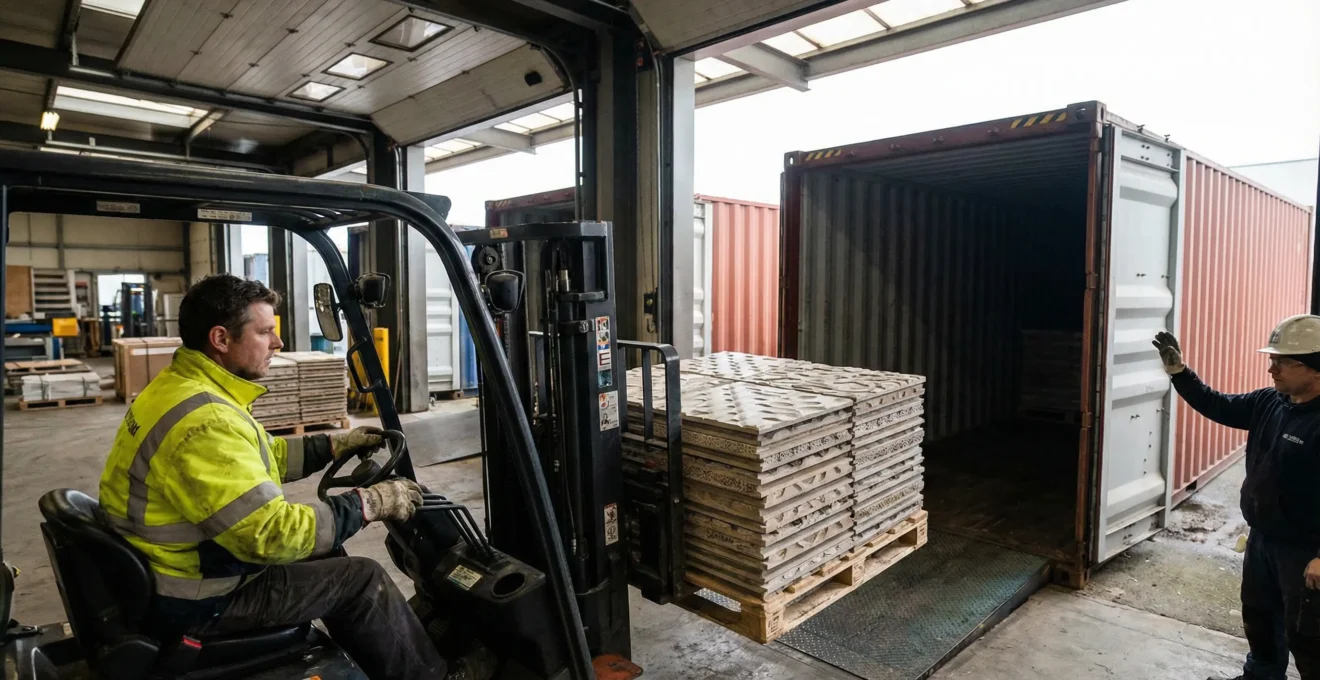
I spoke with a distributor in Ohio last month. He needed WPC wall panels, SPC flooring, and acoustic panels for a commercial project. Three product categories. Each supplier demanded a full container minimum. That meant ordering 18 months of slow-moving inventory just to get decent freight economics on the items he actually needed fast.
This pattern keeps showing up. Building materials distributors across North America face the same squeeze: high minimum order quantities force overbuying, freight costs eat margins, and warehouse shelves fill with dead stock. The sourcing model that worked in 2019 simply does not pencil out anymore.
Mixed-container logistics offer a different equation. One shipment. Multiple product categories. Better container utilization. The operational reality, though, is messier than the sales pitch—and knowing what to verify matters more than the quoted price.
Mixed Container Sourcing in 30 Seconds:
- Single-product FCL orders often leave 25-40% of container space underutilized for mid-sized distributors
- Mixed containers consolidate WPC, SPC, and decorative panels in one shipment—reducing per-unit freight
- Integrated manufacturers (not trading companies) offer the coordination needed to make this work
- Current China-US West Coast rates sit around $2,100 per 40ft container
What follows breaks down the real economics, the operational requirements, and the verification steps that separate reliable mixed-container suppliers from the ones that cause coordination nightmares. The focus stays on building materials specifically—WPC panels, SPC flooring, PVC sheets—because the generic logistics guides miss too much industry context.
A quick note on my perspective: I have spent years consulting with building materials distributors on international sourcing. The patterns I describe come from actual conversations with procurement managers, not theoretical supply chain models. That said, every market segment has its quirks, so take the numbers as directional rather than universal.
Why Traditional Container Ordering Creates Hidden Costs
The math looks simple on paper. You need flooring for a project. The supplier quotes a price per square meter. You calculate landed cost. Done.
Except that is not how the conversation actually goes. NAHB import data analysis shows that 27% of US residential construction materials imports come from China. For many distributors I work with, Chinese suppliers represent the best price-performance ratio on decorative panels and composite flooring. But here is where the hidden costs stack up.
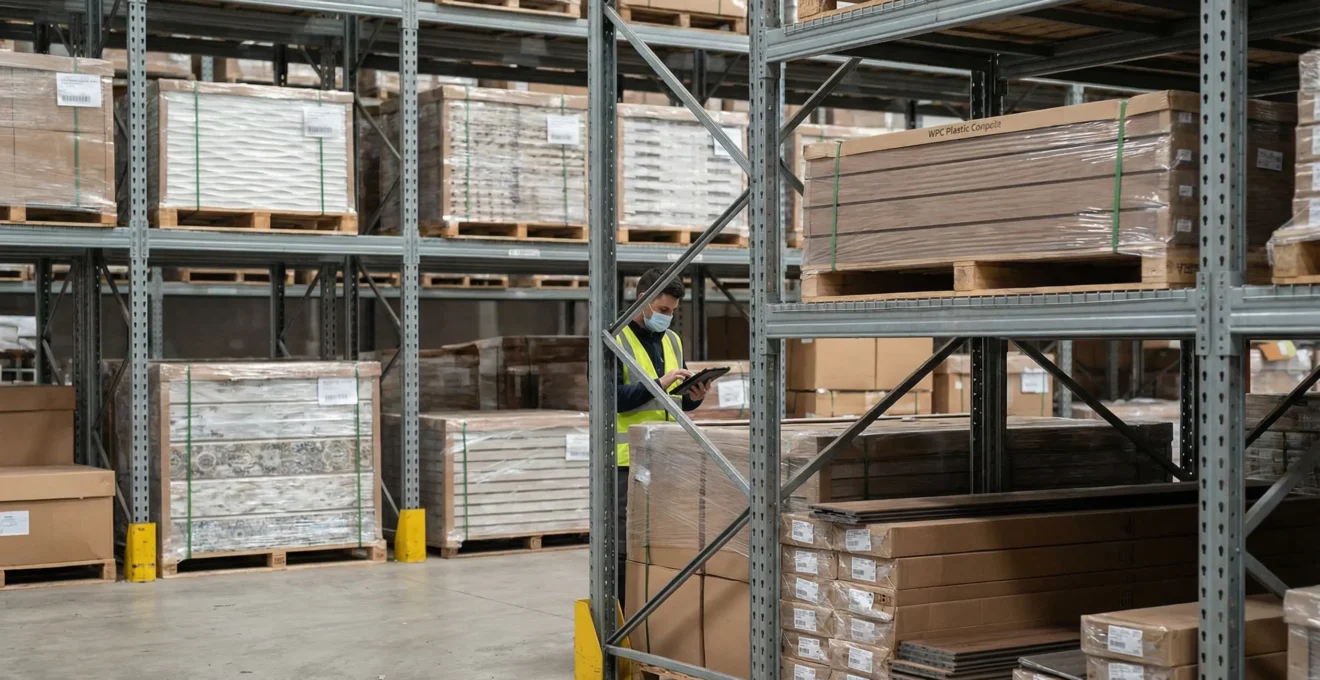
Most manufacturers set minimum order quantities per product line. Want their WPC wall panels? Order a full container. Their SPC flooring? Another container. Acoustic panels? A third. Suddenly, a $15,000 project requirement turns into $60,000 in purchase orders across three shipments.
The real container utilization problem: In my work with mid-sized distributors, I consistently see 25-40% of container space going unused when ordering single product categories. That unused space still costs freight. You pay for air.
The common mistake I see: distributors ordering full containers of a single SKU just to hit the MOQ threshold, then watching that inventory sit for 6-12 months. Capital locked in pallets that gather dust while cash flow tightens elsewhere. This pattern is particularly visible among regional distributors trying to compete on product variety without the volume to justify it.
Freight rate volatility makes this worse. According to Freightos Baltic Index data, current rates hover around $2,100 per 40ft container from China to the US West Coast and roughly $3,350 to the East Coast. When you spread that cost across a container only 60% full, your per-unit freight climbs fast.
How Mixed-Container Solutions Change the Sourcing Equation
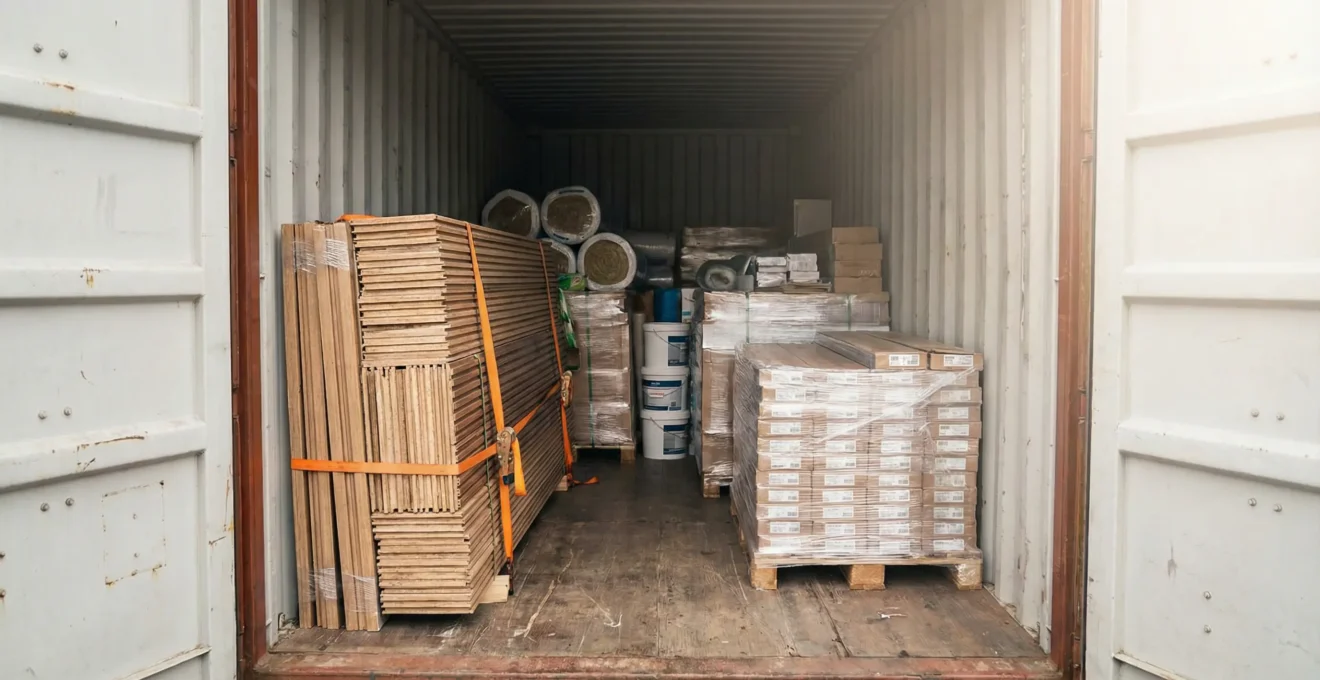
The concept is straightforward: combine multiple product categories into a single container shipment. WPC panels on one side, SPC flooring stacked in the middle, decorative sheets filling the remaining space. One bill of lading. One customs entry. One delivery.
Here is what actually matters: the manufacturer’s production setup. Trading companies can theoretically offer mixed containers, but they coordinate across multiple factories with different production schedules. I interviewed a flooring distributor who tried this route—his WPC panels sat in a warehouse for three weeks waiting for the SPC flooring from a different facility. The “savings” evaporated in storage fees and delayed project timelines.
Integrated manufacturers with multiple product lines under one roof operate differently. Production schedules align. Quality control applies consistent standards across the order. Loading happens from a single facility. Companies like xhwood.com represent this model—factory-direct operations where WPC wall panels, SPC flooring, and acoustic materials come from coordinated production lines rather than cobbled-together sourcing.
The following comparison reflects patterns I have observed across dozens of distributor relationships. Your specific numbers will vary based on product mix and volume:
Comparative data compiled from distributor consultations and updated February 2026.
| Factor | Single-Product FCL | Mixed Container | Impact |
|---|---|---|---|
| Container utilization | 60-75% typical | 85-95% achievable | 20-30% less wasted space |
| Per-unit freight | Higher (spread over fewer units) | Lower (maximized capacity) | 15-25% reduction possible |
| Inventory turns | Slower (overstock on single SKUs) | Faster (right-sized quantities) | Less capital tied up |
| Supplier coordination | Multiple contacts per order | Single point of contact | Less procurement overhead |
| Quality consistency | Varies across suppliers | Unified QC standards | Fewer inspection surprises |
The timeline from quotation to delivery typically runs 8-10 weeks for mixed orders. Week one covers product selection and pricing. Weeks two and three involve sample approval—never skip this. Production takes three to five weeks depending on complexity. Quality inspection and container loading happen before ocean freight adds another four to six weeks. Customs clearance varies, but figure a week on the US side.
What to Verify Before Committing to a Mixed-Container Supplier
My take, based on what I have observed: the coordination capability matters more than the quoted price. A supplier offering rock-bottom unit costs but running production across five factories will cost you more in delays and quality variance than a slightly higher-priced integrated operation.
C.H. Robinson freight market analysis shows global port congestion has eased from 10% of container capacity stuck outside ports to 8.4%. That helps timing predictability. But your supplier’s internal coordination determines whether your mixed order ships on schedule or sits waiting for one delayed product line.
Mixed-Container Supplier Verification Checklist
- Confirm single-facility production for all product categories in your order
- Request loading plan showing how products will be organized in container
- Ask for pre-shipment inspection photos of loaded container
- Verify HTS classification familiarity for mixed-product documentation
- Check reference customers importing similar product mixes to your market
Watch out for this trap: suppliers who say yes to everything. Real factories know their limitations. If a manufacturer claims they can produce any combination of products in any quantity with perfect timing, that is a trading company talking—not a factory with actual production constraints.
For distributors evaluating the broader investment in sustainable building materials, the supplier relationship matters beyond a single transaction. WPC and SPC products position well for environmental certifications, but only if your source maintains consistent formulation and documentation across orders.
When Mixed Containers Are NOT the Right Choice: If you order high volume of a single product category (full container loads monthly), single-product FCL probably offers better pricing per unit. Mixed containers solve the variety-without-volume problem—not the high-volume commodity play.
Your Questions on Mixed-Container Building Materials Orders
Your Questions on Mixed-Container Building Materials Orders
Does mixing products in one container affect quality control?
With integrated manufacturers, no. They apply the same QC standards across product lines. The risk increases with trading companies coordinating multiple factories—inconsistent standards between facilities create variance. Always request inspection reports per product category, not just the container overall.
What minimum order value makes mixed containers viable?
Generally, you want at least $15,000-20,000 in product value to justify the logistics overhead. Below that threshold, LCL shipping (less than container load) through a consolidator may cost less—though you lose control over timing and handling.
How does customs clearance work with mixed product categories?
Each product category requires its own HTS classification. A single container with three product types means three line items on your customs entry. Experienced exporters provide detailed packing lists with classifications already identified. This is standard practice—not a complication if documentation is proper.
Can I combine products from different manufacturers in one container?
Technically possible through freight consolidation services, but I do not recommend it. You lose quality consistency, complicate claims if damage occurs, and add coordination layers that typically erode any cost savings. The efficiency of mixed-container sourcing depends on single-source coordination.
What happens if one product category is delayed in production?
This is why integrated facilities matter. A factory controlling all production lines can adjust scheduling to align completion dates. With trading companies, one delayed factory holds up the entire shipment—sometimes for weeks. Build two-week buffer into your timeline expectations regardless of supplier promises.
For contractors and distributors also serving residential end customers, understanding priorities for homeowner renovations helps align your product mix with actual demand patterns. The products moving fastest through your warehouse should drive your container composition—not the categories where you negotiated the best per-unit price.
The Next Step for Your Sourcing Strategy
Your Plan of Action
- Audit your last 12 months of orders—identify which single-product containers ran below 80% utilization
- Calculate your current per-unit freight across product categories
- Request mixed-container quotes from 2-3 integrated manufacturers (not trading companies)
- Order samples before committing to any production run
The distributors seeing the best results from mixed-container sourcing share one characteristic: they evaluated the supplier’s coordination capability before negotiating price. Get that sequence backward, and the savings on paper turn into delays in reality.